
Signal QC
Always-on
Not retrospective review
Primary risks
Wear + Sync
Battery, pairing, latency
Recovery window
<72h
Before gaps compound
Signal QC Workflow
Detect → Diagnose → Recover → Escalate
Signal quality control (signal QC) is the operational monitoring of whether wearable data is present, recent, complete, and usable enough to support study objectives. It goes beyond simple device assignment or participant enrollment.
Signal QC is how teams distinguish “device deployed” from “data trustworthy.”
Related reading: Digital Measures Powered by Wearables
Wearable studies can lose data silently. Signal QC creates the visibility needed to identify drift early and keep digital measures usable over time.
Endpoints weaken when signals are missing, stale, sparse, or technically compromised for long periods.
Participants may think everything is working while sync, battery, or permissions have already stopped data flow.
Early detection gives teams a chance to restore data continuity before missingness becomes hard to explain or impossible to recover.
Structured signal QC prevents coordinators from becoming the first place where device issues are discovered and triaged.
Teams can interpret results with more confidence when they understand signal completeness and device-health context over time.
As studies get longer, weak QC becomes more expensive because small data issues compound into longitudinal evidence loss.
Signal QC is not just a technical safeguard. It is a study-execution safeguard.
Signal QC should answer: “Can this signal still support the study?” not just “Is the device in the field?”
Wearable data quality rarely breaks in one obvious moment. It usually degrades through a handful of predictable failure patterns.
These are not just technical issues. They are operational signals that require early action.
See related pages: Device Integration · Support · Validation
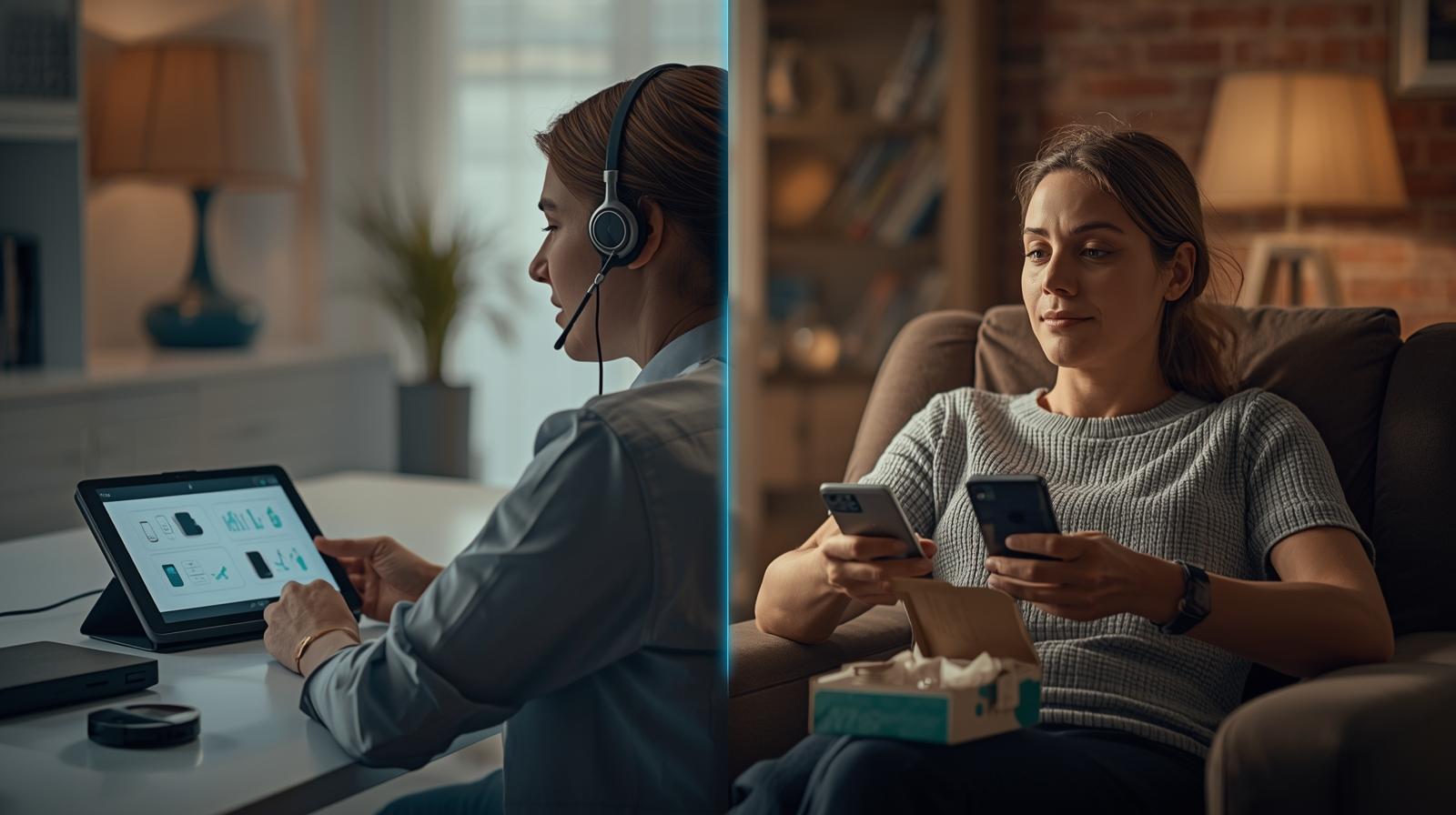
Strong signal QC is not just a dashboard. It is a repeatable operating model that detects, interprets, and resolves data-quality risk before it becomes endpoint damage.
Monitor wear-time, valid-day status, sync recency, battery state, and device health continuously.
Determine whether the issue is behavioral, technical, temporary, or escalating into a true data continuity risk.
Trigger practical response steps such as charge, re-pair, re-sync, settings check, or patient outreach.
Alert sites only when needed, with context and prior actions already documented.
Track issue timing, action taken, recovery status, and recurrence patterns to support oversight and root-cause learning.
Use recurring QC signals to strengthen device selection, onboarding, workflows, and participant support.
Signal QC works best when digital monitoring is paired with human follow-through.
Strong programs define signal-quality rules before launch and treat QC thresholds as operational triggers, not passive reporting metrics.
The goal is simple: fewer silent gaps, faster recovery, stronger confidence in wearable-driven digital measures.

No. Some signal issues are technical, but many begin with participant behavior, follow-up timing, or weak recovery ownership.
Yes. A participant may still be enrolled and trying to comply while the device has poor wear-time, sync failure, or battery loss that undermines usable data quality.
Because detecting a problem is only half the job. The study still needs a reliable way to recover the signal before missingness compounds.
Delve combines device monitoring, analytics, and human support to protect wearable-driven digital measures, reduce silent missingness, and keep longitudinal signals usable throughout the study.
Book a Wearables Walkthrough